
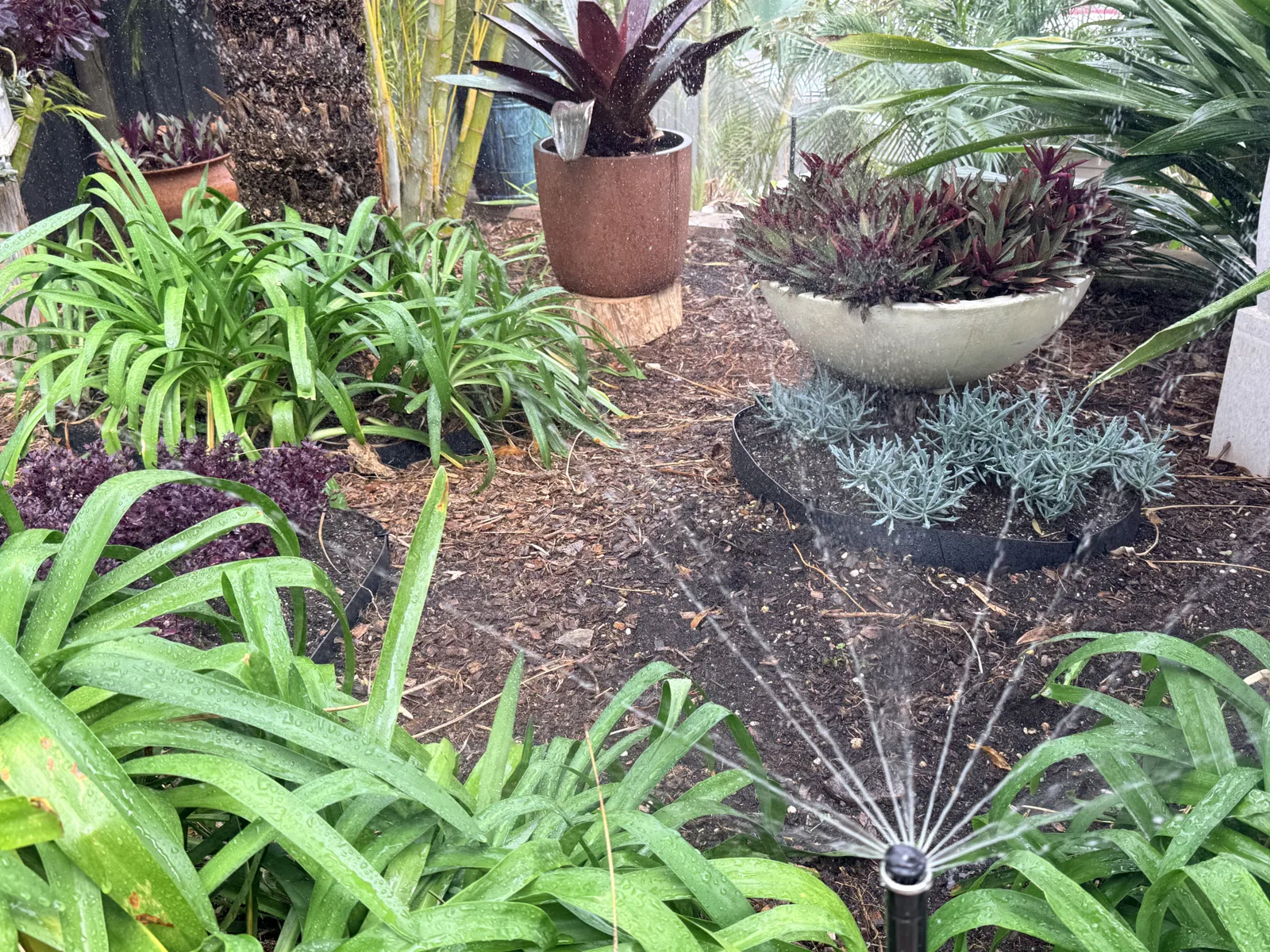
A dry patch beside a healthy lawn, a sprinkler that barely rises, or a valve box that stays wet between watering cycles can be early signs of an irrigation fault. Regular irrigation maintenance helps identify these problems before they lead to wasted water, stressed plants and larger repairs.
For homes, strata properties and commercial landscapes across Sydney, a useful service checks how the whole system performs. Each zone should start when instructed, water its intended area and stop properly when the cycle finishes.
What an irrigation maintenance visit should cover
An inspection starts at the controller and works through the system one zone at a time. Running each zone makes it possible to check sprinkler operation, dripline delivery, visible leaks, coverage and shut-off.
A controller display alone cannot confirm that water is reaching the garden. A station may appear to be running while a valve fails to open or a damaged pipe reduces the pressure available to the sprinklers. Testing the system helps establish which part needs attention before components are replaced.
Controller settings and seasonal adjustments
Start times, watering days, run times and seasonal adjustments should suit the current landscape and conditions. Extra start times or outdated programmes can cause repeated watering, while missed cycles can leave parts of the garden dry.
Settings should be reviewed as the weather changes. Lawns, garden beds and pots can have different requirements, and a programme that worked in summer may apply too much water during cooler or wetter periods.
A controller upgrade may help when the existing unit is unreliable, difficult to manage or no longer suits the system. Its value depends on the condition of the valves, wiring and irrigation zones it operates.
Valves, manifolds and concealed leaks
Valves and manifolds deserve close attention because one fault can affect an entire zone. Warning signs include water pooling around a valve box, a zone that fails to start, reduced sprinkler performance or water continuing to flow after a cycle.
Below-ground pipework and fittings can also develop leaks that are difficult to see from the surface. Persistently damp ground or an unexplained change in pressure warrants investigation. The visible wet patch helps locate the problem, but testing is needed to establish its source.
Once a repair is completed, the affected zone should be run again to check the connections, water delivery and shut-off before the work is finished.
If a zone does not respond to the controller, the cause may involve wiring or a solenoid as well as the valve itself. Wire fault detection helps trace cable and connection problems on established systems.
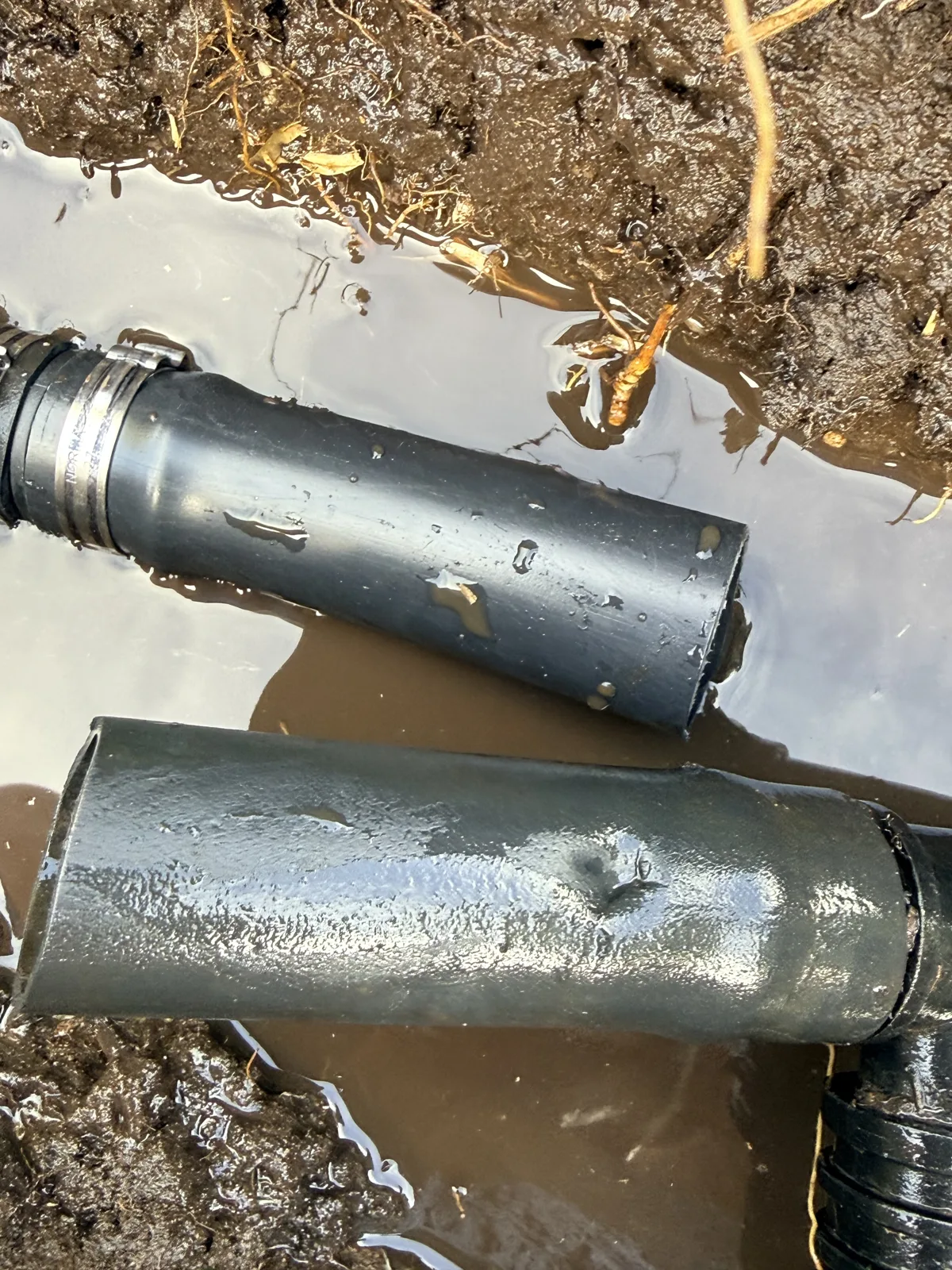
Check sprinkler coverage and dripline delivery
Blocked, tilted, buried or damaged sprayheads can leave dry patches and direct water onto paths or walls. During a service, heads should be checked for operation, alignment and coverage across the intended area.
Plant growth can also change how a zone performs. A sprinkler that once had a clear path may now be obstructed by foliage. Extending the run time can overwater other areas without resolving that obstruction.
Dripline needs its own checks. Cuts, loose fittings and blocked emitters may be concealed beneath mulch, with the first signs appearing as a wet pocket or plants receiving inconsistent water. Inspection should confirm that water reaches the dripline run and identify damaged sections or fittings.
Repeated failures deserve further investigation. Positioning, pressure, root intrusion and damage from garden work may all need consideration when deciding how to repair the affected section.
When a full irrigation audit makes sense
Routine servicing is useful when the system layout and operating history are understood. An irrigation audit is worth considering when several zones are unreliable, coverage has declined or nobody has a clear record of how the system is arranged.
For strata and commercial properties, an audit provides a structured basis for prioritising work. It can identify urgent repairs, adjustments to improve coverage and upgrades that can be planned in stages.
The findings should guide the scope. A controller correction or targeted repair may be sufficient; a system with recurring faults may need a broader review.
Signs it is time to book a service
Arrange an inspection if you notice:
- Zones that fail to start or continue watering after their cycle.
- Persistently wet ground or water collecting around valve boxes.
- Sprayheads that no longer rise or reach their usual distance.
- Dry patches, overspray or runoff during watering.
- Damaged dripline or plants receiving inconsistent water.
- Controller errors or an unexplained increase in water use.
Keeping a brief record of the affected zone, when the problem occurs and any recent changes helps with diagnosis. Photographs can also be useful, particularly for intermittent faults.
Book irrigation maintenance in Sydney
Checking the system before warmer weather increases demand gives time to identify faults and organise repairs. The appropriate service interval depends on the system's size, condition and operating history.
Smit Irrigation & Landscaping provides irrigation maintenance, audits, fault finding and repairs across the Northern Beaches and Greater Sydney. We assess controllers, valves, manifolds, wiring, sprayheads and dripline to establish what needs attention.
If your irrigation is leaking, watering unevenly or due for a check, book an irrigation service or call 0415 150 052.