
An irrigation system can start on time while watering paving, missing parts of the garden or leaving the lawn too wet. Watching the sprinklers switch on tells you only part of the story.
Two separate residential audits we carried out in Sydney show why it helps to check each watering zone. One revealed leaks and obstructed sprays. The other identified a lawn that was very wet underfoot despite poor sprinkler coverage.
Garden sprays running with poor coverage
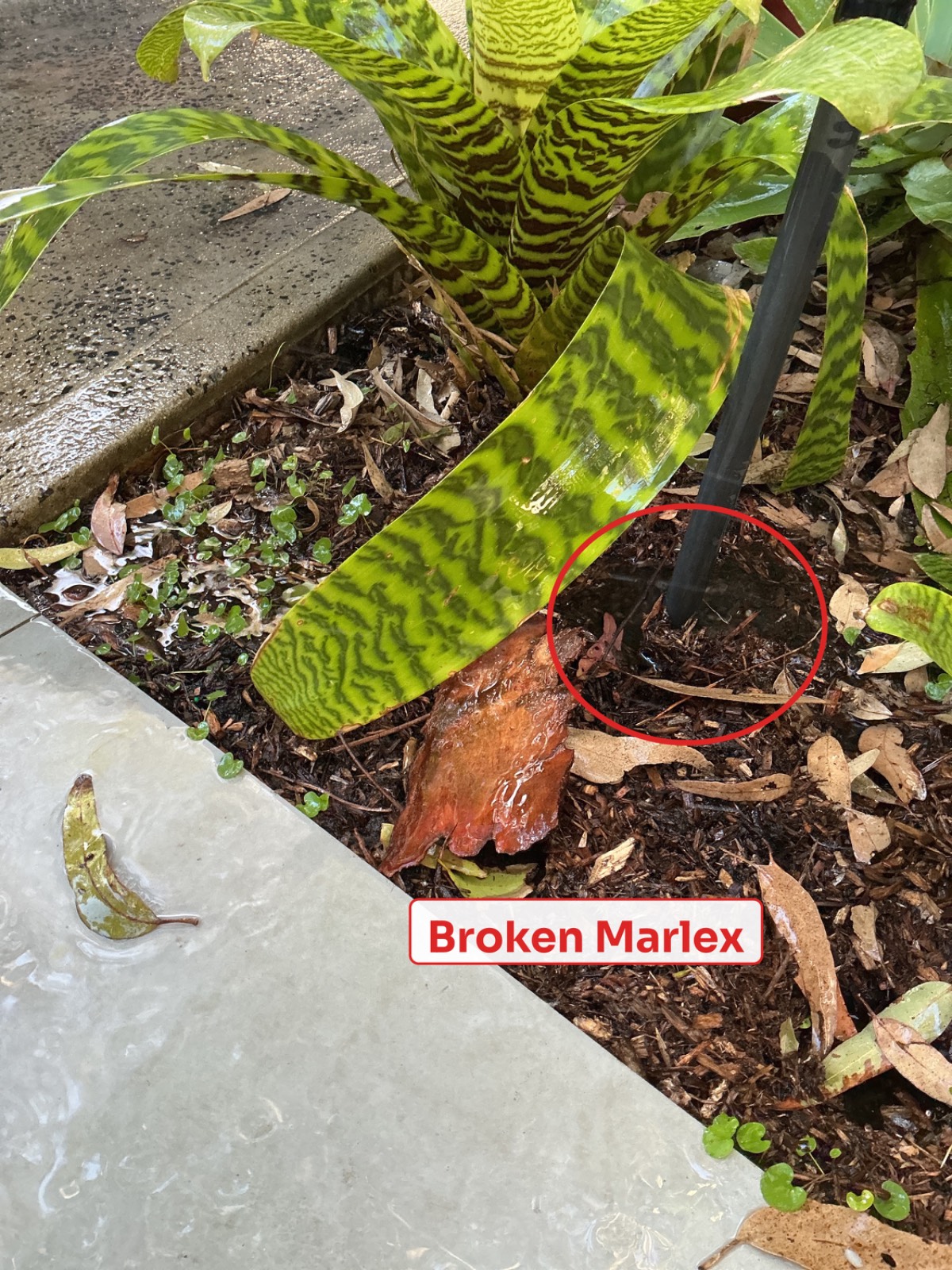
At one property, established planting had grown over some of the sprays. Several risers needed straightening and support, and water was landing on paving and a footpath. Dry areas remained in the garden.
The audit also recorded leaks in the pipework supplying individual zones. One leak was noted as affecting pressure in its zone. These were specific faults to investigate and repair before relying on a longer watering programme.
Recommendations included repairing the leaks, raising or realigning affected sprays, stabilising risers and replacing selected nozzles. The report recorded these as proposed works. The value of the audit was a clear list of issues and the work needed to address them.
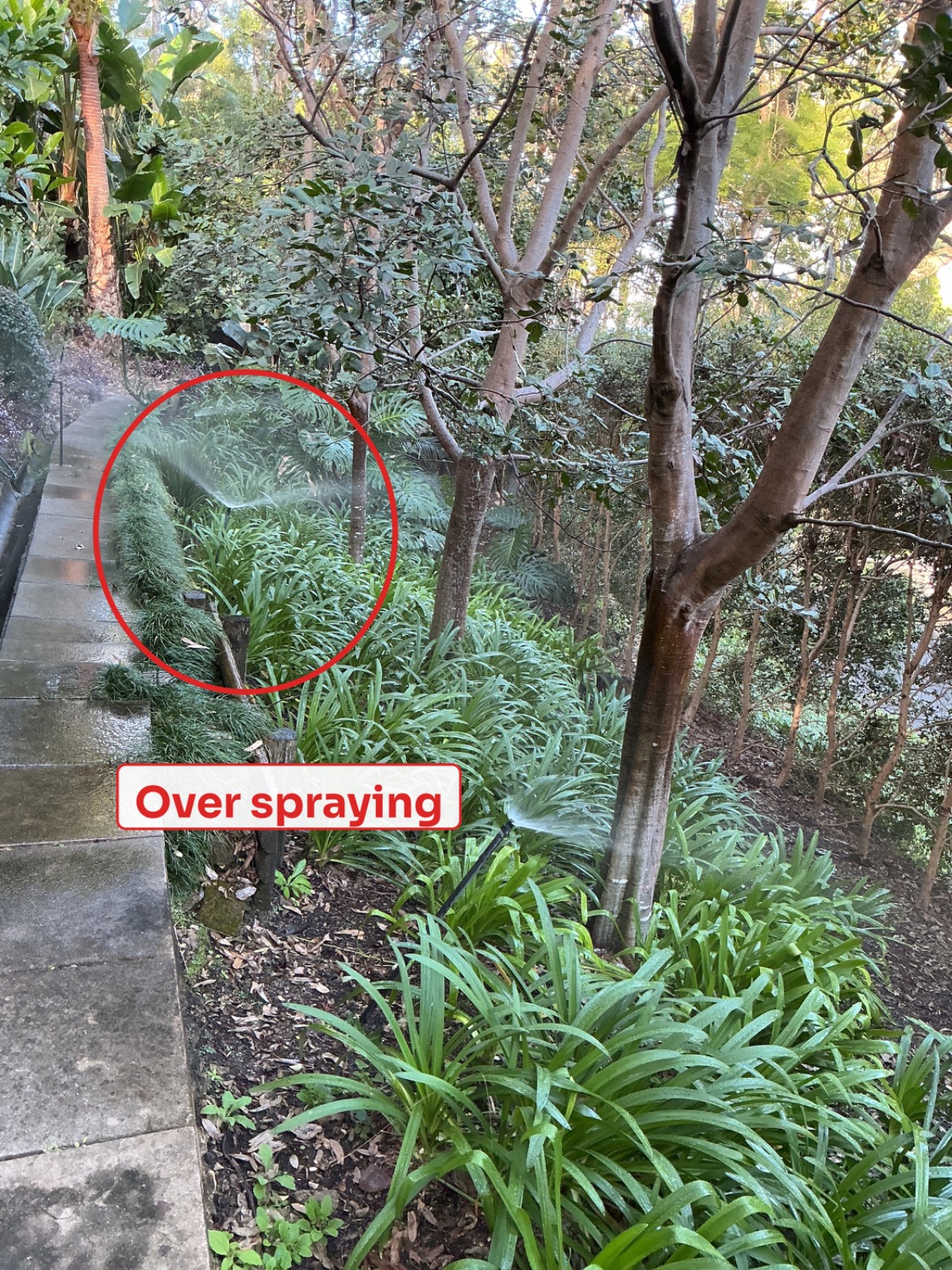
Sprinkler overspray onto a footpath, recorded during a Sydney irrigation audit.
A wet lawn with unsuitable sprays
At a different Sydney property, the front lawn was very wet underfoot. The audit recorded excessive watering time, poor coverage and sprayheads that were unsuitable for that lawn area.
Turf watering times were reduced during the audit. We subsequently changed the front-lawn sprays as part of the follow-up work. That addressed the equipment choice as well as the watering schedule, with the aim of improving how the lawn was watered.
The rain sensor at this property operated correctly when tested. That was useful to confirm, but the lawn still needed attention to its sprinkler setup and runtimes. The findings showed why sensor testing and an inspection of the watered area both matter.
What these findings mean for your garden
Before increasing the runtime for a dry patch, check whether water is reaching it. A spray hidden by planting or aimed away from the garden needs attention to its position. A leak needs repair. Those jobs address different problems from an unsuitable watering schedule.
After changing sprays or nozzles, review the programme against the equipment now installed and the needs of that area. Observe how the soil and plants respond as conditions change.
Sydney Water explains in its Garden Watering Systems guide that efficient automatic irrigation depends on suitable design, programming and maintenance. The soil, planting and rate of water delivery all influence how a zone should be watered.
Keep water in the landscape
Water landing on paving is also relevant to Sydney’s watering requirements. Where Sydney Water’s Water Wise Guidelines apply, runoff and overspray onto hard surfaces are prohibited. Check the provisions for your water source and system when reviewing the programme.
The current Sydney Water Water Wise Guidelines cover permitted watering times, irrigation methods and exceptions.
Signs your irrigation needs a check
- Dry patches alongside areas that are already wet.
- Sprays obstructed by plants or watering paths.
- Visible leaks, damaged heads or uneven spray patterns.
- Repeated increases in watering time without resolving the problem.
Arrange an irrigation audit in Sydney
An audit can help identify the cause of poor watering and explain which repairs or adjustments are needed. Smit Irrigation & Landscaping provides irrigation audits, repairs, maintenance and upgrades across Sydney and the Northern Beaches.
To arrange a check of your irrigation system, contact Smit Irrigation & Landscaping.